Once the outdoor unit is up and the pipes are in, it is tempting to treat the job as done. It is not quite. Commissioning sets the system up to run the way it was designed, the grant is claimed at this point, and the handover is your one good chance to collect the papers you will need later. A few minutes of checking here saves a lot of chasing afterwards.
What commissioning covers
Commissioning is the documented switch-on. The installer fills and pressure-tests the system, checks the outdoor unit and the cylinder, sets the flow temperature and the controls to the design, and records the readings and settings as they leave them. Those records become the commissioning record you are given.
It is worth being at home for it. Ask to see the system running, the controls set, and the hot water heating up. If anything differs from the design you were given, such as a higher flow temperature than planned, ask why before the installer leaves.
The grant claim
For a grant-funded job, the grant was approved before the work as a voucher in the installer's name, and taken off your quote. After commissioning, the installer registers the installation with MCS and claims the voucher from Ofgem. This has to happen inside the voucher period: 3 months from issue for air source, 6 months for ground source. The claim is between the installer and Ofgem; your part was confirming consent at the start.
If the installation went ahead before an application, the retrospective route applies instead: the application must be properly made within 120 days of commissioning, and the risk of refusal sits with the owner.
The papers to keep
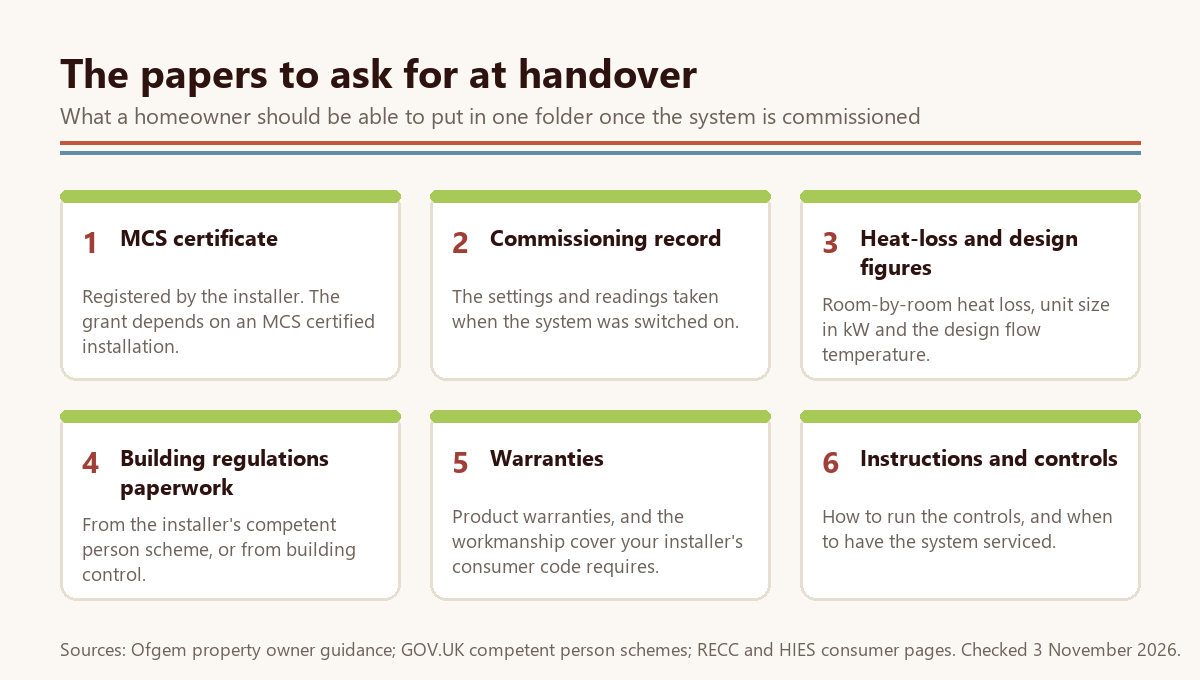
- The MCS certificate. It shows the installation was registered by an MCS certified installer, which the grant depends on. Keep it with the house deeds.
- The commissioning record. The tests, settings and readings at switch-on: the starting point for any future engineer.
- The heat-loss and design figures. Room-by-room heat loss, the unit's size, the design flow temperature and the radiator schedule. These show how the system was meant to run.
- Building regulations paperwork. Either from the installer's competent person scheme, which lets them self-certify the work, or from building control if they are not in one.
- Warranties. The manufacturer's product warranties, registered if registration is required, and the installer's workmanship cover. The RECC code, one of the consumer codes Ofgem lists for the scheme alongside HIES and MCS, requires at least a two-year workmanship warranty.
- Instructions. How to use the controls, what the installer set them to, and when the system should be serviced. For ground source, add the layout of the ground loop.
- The final itemised invoice, showing the grant deducted, to match the quote you accepted.
Learning the controls before the installer leaves
A heat pump is run differently from a boiler. It is usually set to run steadily rather than in short bursts, and the controls may adjust the flow temperature to the weather outside. Ask the installer to show you how to change the heating times and temperatures, how the hot water is scheduled, and which settings you should leave alone. Write down anything they change from the design and why.
If the system will heat the cylinder to a higher temperature on a schedule to keep the water safe, ask when that happens so it does not come as a surprise.
Servicing and warranty conditions
Read the warranty documents you are handed rather than filing them unread. Manufacturers' warranties often come with conditions, such as registering the product within a set time or having it serviced at set intervals, and missing one can weaken a later claim. Note the dates in the same place as the voucher dates you kept during the project.
Ask the installer, before they leave, what servicing the system needs and how often, who can do it, and whether they offer it themselves. A heat pump that is serviced by someone who has the commissioning record and the design figures starts from the right information; one serviced without them starts from guesswork.
If you sell the house, the folder goes with it. A buyer's solicitor may ask for the MCS certificate and the building regulations paperwork, and a buyer will want to know what warranty is left and when the system was last serviced.
After handover
Keep everything in one folder, paper or digital. If something is not right after the installer has gone, contact them in writing first and give them a chance to put it right. If that fails, the consumer code they belong to has a complaints route: HIES and RECC both set out what their members must do and how disputes are handled. You can check whether an installer is MCS certified on the MCS directory, and if a firm claims TrustMark registration, TrustMark's own site is the place to confirm it.
If you are still at the start of the project, the installation stages and the heat-loss survey pages show what comes before this point, and the cost planner works out the dates your own job would need to meet.